Top Technology Stack for Startups in 2026
A pragmatic, battle-tested stack that lets a small team ship fast today and scale without a rewrite tomorrow.
What makes a good startup stack
The best technology stack for startups is not the newest or the flashiest — it is the one that lets a small team move quickly, hire easily, and scale without an expensive rewrite. That means choosing mature, well-documented tools with large communities and strong hosting support.
A startup stack should optimize for three things: developer velocity, so you ship features fast; maintainability, so the codebase stays healthy as it grows; and a clear scaling path, so early decisions do not become tomorrow’s bottleneck. The stack below hits all three and powers a huge share of successful products today.
The recommended stack
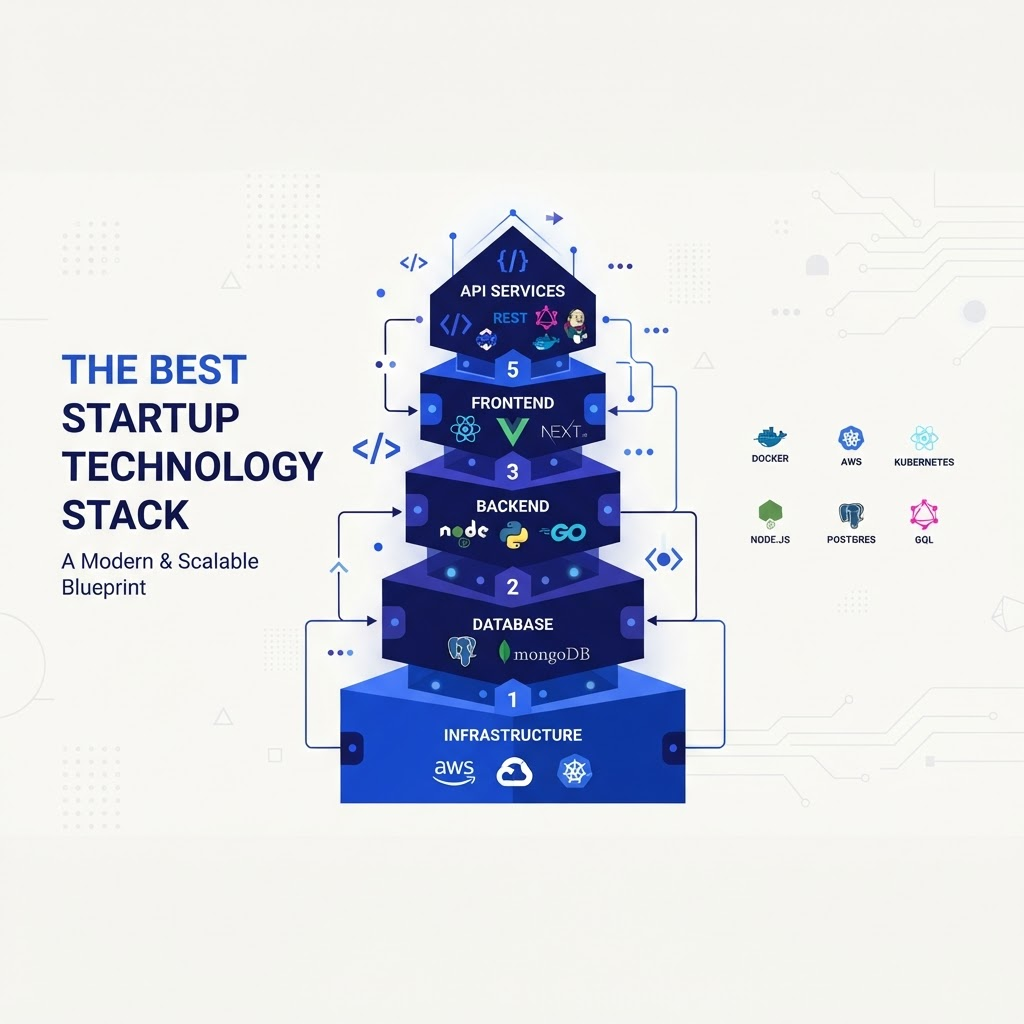
Here is the stack we reach for on most new products. Each choice is popular enough that you can hire for it, and robust enough to carry you well past product-market fit.
- Frontend: React with Next.js and TypeScript for fast, SEO-friendly, type-safe interfaces.
- Backend: Node.js for JavaScript-everywhere teams, or Python for data- and AI-heavy workloads.
- Database: PostgreSQL — reliable, relational, and flexible enough for most products.
- Infrastructure: AWS or a managed platform like Vercel for zero-ops deployment and global scale.
- Auth & payments: proven providers rather than rolling your own.
When to deviate
Defaults are defaults, not dogma. Real-time collaboration may call for websockets and an event-driven backend. Heavy machine learning pushes you toward Python and specialized infrastructure. A content-heavy marketing site benefits from a headless CMS.
The key is to make deviations deliberate. Every non-standard choice adds hiring difficulty and maintenance burden, so it should earn its place by solving a real problem for your product, not by being interesting.
Frequently asked questions
Yes — it combines fast development, excellent SEO, and a smooth path to scale, making it a top choice for startups.